


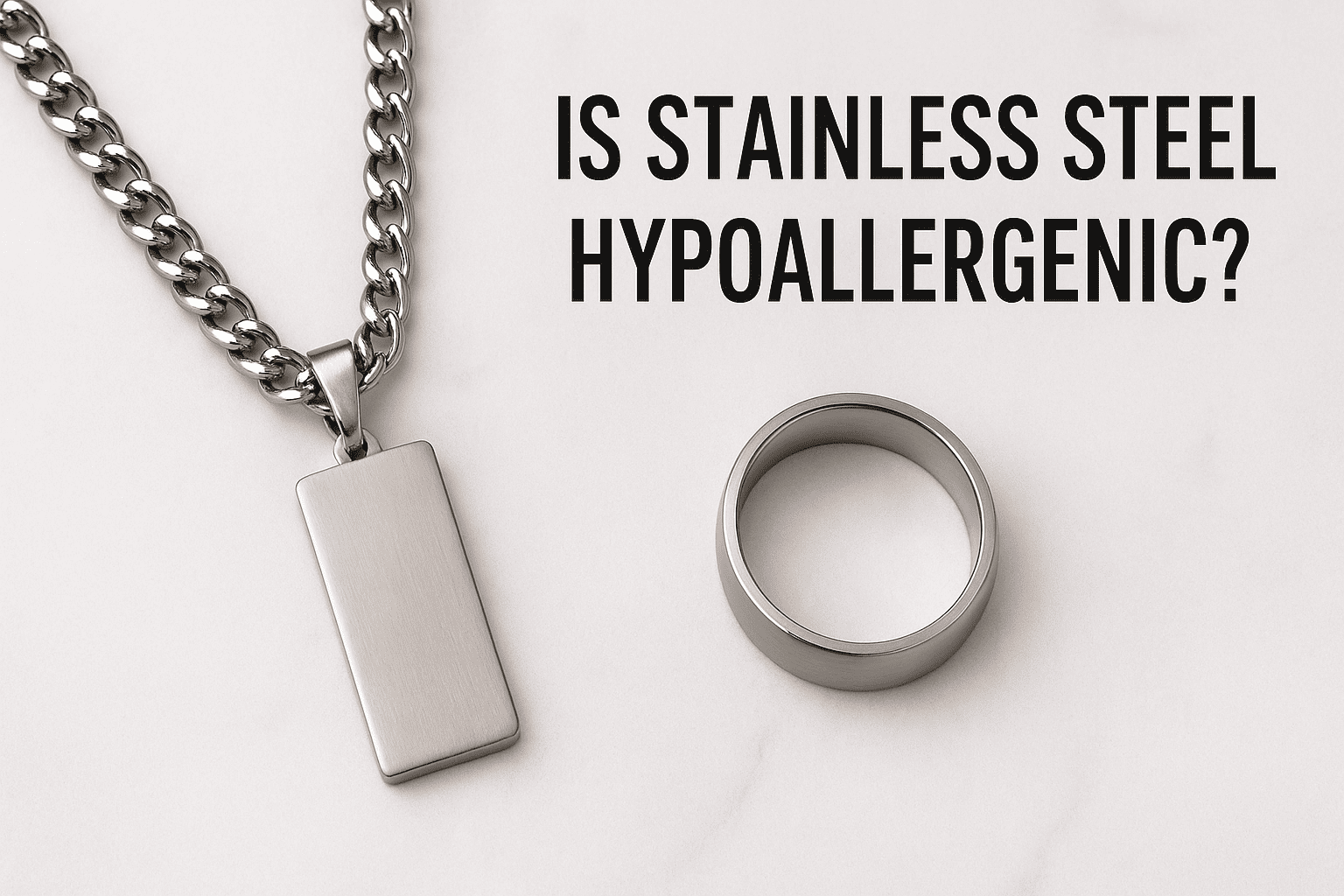
Many people wonder, is stainless steel hypoallergenic? This is an important question for anyone with sensitive skin or a history of allergic reactions to jewelry. Stainless steel has become a popular material for rings, necklaces, and bracelets because of its durability, affordability, and stylish appearance. But does it really prevent skin irritation? Let’s break down the facts and what you need to know before choosing stainless steel jewelry.
What Does Hypoallergenic Mean?
Before deciding whether stainless steel is hypoallergenic, it is important to understand what the term means. Hypoallergenic jewelry is designed to reduce the risk of allergic reactions. People with metal allergies often react to nickel, which is a common component in many alloys. Hypoallergenic materials typically have low or no nickel content, making them safer for sensitive skin.
Is Stainless Steel Hypoallergenic?
Stainless steel is considered relatively safe for most people, but whether it is truly hypoallergenic depends on the specific grade. Some stainless steel alloys contain nickel, while others have minimal amounts. This can make a big difference for someone prone to allergic reactions. The most commonly used type for jewelry is surgical-grade stainless steel, which has lower nickel content and is designed for body-safe applications.
Common Stainless Steel Grades and Their Safety
There are several grades of stainless steel used in jewelry. Here is a quick comparison chart:
| Stainless Steel Grade | Nickel Content | Hypoallergenic Level |
|---|---|---|
| 304 Stainless Steel | Moderate | Medium |
| 316L (Surgical Steel) | Very Low | High |
| 316LVM (Implant Grade) | Extremely Low | Very High |
| 430 Stainless Steel | Low | High |
From this chart, you can see that surgical and implant-grade stainless steels are better choices for people with sensitive skin. They contain very little nickel, reducing the chances of an allergic reaction.
Why Nickel Causes Allergic Reactions
Nickel is one of the most common causes of metal allergies. When it comes into contact with skin, it can cause redness, itching, and irritation. People who are sensitive to nickel should always check the metal composition before buying jewelry. Even a small amount can cause discomfort if worn for long periods.
Benefits of Stainless Steel Jewelry
Stainless steel remains a top choice for jewelry for many reasons, especially when selecting the right grade. Here are some of the benefits:
- Durability: Stainless steel is strong, scratch-resistant, and can last for years.
- Affordability: It is more cost-effective compared to gold or platinum.
- Low Maintenance: Easy to clean and does not tarnish quickly.
- Variety: Comes in different finishes and designs to suit every style.
- Hypoallergenic Options: Surgical-grade stainless steel is safe for most sensitive skin types.
How to Choose the Right Stainless Steel Jewelry
Not all stainless steel jewelry is created equal. If you have sensitive skin, consider the following tips:
- Look for 316L or 316LVM: These are surgical and implant-grade materials designed for safe use on the body.
- Avoid Cheap Imitations: Low-quality jewelry may use steel with higher nickel content.
- Check for Coatings: Some pieces have protective layers that reduce skin contact with nickel.
- Test Before Wearing: If you know you have a nickel allergy, try wearing the jewelry for a short time first.
Alternatives for Highly Sensitive Skin
If you have severe nickel allergies, you might want to explore other hypoallergenic metals. Some good alternatives include:
- Titanium: Extremely lightweight and nickel-free.
- Tungsten Carbide: Durable and usually hypoallergenic when cobalt-free.
- Platinum: Pure and very safe, but more expensive.
- Niobium: Rare and completely hypoallergenic.
Final Thoughts on Stainless Steel and Allergies
So, is stainless steel hypoallergenic? The answer is yes for many people, especially if you choose surgical or implant-grade stainless steel. While some grades contain nickel, high-quality stainless steel with low nickel content is generally safe and does not cause irritation for most wearers. Always check the grade and source of your jewelry before buying if you have sensitive skin.
Disclaimer: This article is for educational purposes only and should not be taken as medical advice. If you have severe allergies, consult a healthcare professional before wearing any metal jewelry.